
Mio Onodera
Local journal editor, seeking truthful records and careful listening.
Letters on the Sea Breeze · Kaifudo Bookstore · Kamakura, Japan
On the ancient coast of Kamakura, Fumiko Miura has run Kaifudo Bookstore for four decades. Approaching retirement, she seeks to hand over her collection without sacrificing the building’s spirit. Paper restorer Haru Fujisaki and local journalist Mio Onodera navigate property rights, craft ethics, and quiet affection alongside carpenters, baristas, and neighbours. Ink fades on paper, but shared promises endure like the steady ocean tides.
Read the novelLocal journal editor, seeking truthful records and careful listening.
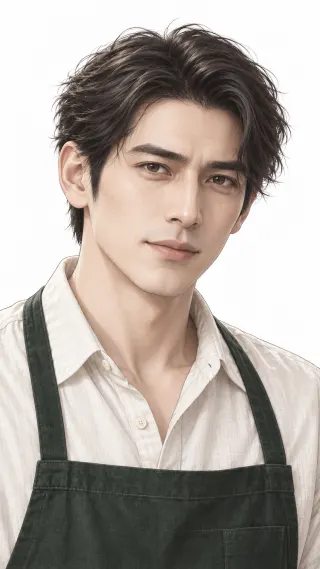
Paper conservator, dedicated, quiet, and ethical in his craft.
[2026-04-12] At four in the afternoon, sea breezes carrying the tang of Sagami Bay drifted across the Enoden railway tracks into the narrow alleys of Hase. Beneath the eaves of Kaifudo Bookstore, a two-story timber townhouse, a brass wind chime hung for half a century clinked softly. Proprietress Fumiko Miura slid open the wooden lattice door as late afternoon sunlight slanted across walnut shelves.
In the back workshop, paper conservator Haru Fujisaki sat at a broad cypress bench in a dark linen apron. Holding an ultra-fine hair brush, he applied prepared wheat starch paste to the damaged hinge of a Meiji manuscript, his concentration as steady as stone.
"Haru, these Yokohama opening-era washi documents suffered severe damp; the fibers are acidifying and brittle," Fumiko entered carrying a tray and set down hot bancha. "Do not rush; the paper outlives all of us."
Haru looked up to take the cup, faint scent of warm paste still on his fingers. "Fragile as it is, reinforced fibers will hold another century. How are your joints today, Aunt Fumiko?"
Fumiko smiled gently, gazing past the bench window toward the camellias in the courtyard. "Rainy days bring aches; time spares no one. It is time to think about this old shop’s next chapter."
From the front came the crossing bell of the Enoden, followed by the train’s deceleration. Young freelance editor Mio Onodera hurried into the shop with a worn canvas bag, her sneakers squeaking softly on pine floorboards.
"Aunt Fumiko, the proofs for the Kamakura artisans feature in Shioon magazine are here," Mio placed typed galleys on the counter. "It includes our interview on Kaifudo’s fifty years."
Haru emerged from the workshop, gazing at the yellowed monochrome photo on the cover. Wrapped in twilight and surf, the old bookstore settled into another deep, quiet evening.
[2026-05-18] In early summer May, sunlight along the Kamakura shore turned Yuigahama swells into silver crests. Mio sat on Kaifudo’s street-facing wooden bench with iced barley tea, her notebook filled with interview notes.
Maki Miura came down from the second floor with rolls of binding bookcloth. As Fumiko’s niece and bookbinder, her fingers carried faint scents of beeswax and botanical indigo dye.
"Mio, I heard the development group submitted a revitalisation proposal, and Kaifudo is within the planning zone?" Maki stacked cloth neatly on the table, cautious and concerned.
"Manager Katagiri sent a letter of intent, but Aunt Fumiko insists property and collection stay separate," Mio closed her notebook. "The shop cannot be a mere tourist prop; it needs workable terms."
Washing paste brushes in the rear, Haru found a yellowed, unopened envelope tucked between old leaves. The address bore a late Showa Kamakura postmark bound for Tokyo, its stamp faded.
Fumiko stepped into the workshop, her gaze faltering for an instant before settling. "My late husband set this aside when sorting estates; the recipient moved away long ago. We agreed never to publish private mail."
Haru reverently returned the letter to an acid-free archival box. "A restorer’s duty is safeguarding paper, not prying into lives. Every keepsake at Kaifudo remains secure."
Afternoon light pierced the townhouse clerestory, dust motes drifting in the beam. Within this house of memories, silence and respect weighed heavier than grand declarations.
[2026-06-03] Early June tsuyu rains cloaked Sagami Bay in soft mist. Architect Ritsu Sakakibara entered Kaifudo with a spirit level and field notebook, studying the stout zelkova purlin spanning two stories.
Carpenter Takeru Ishii crouched by the rear foundation, tapping pillar bases with a wooden mallet. "Tenons swelled slightly from humidity, but the heartwood is solid. Replace footings and brace for seismic loads, and she stands another fifty years."
Ritsu noted figures on his blueprint and turned to Haru: "Developers usually favor demolition, but I am designing a structural shell that keeps Kaifudo’s historic core intact alongside public uses."
Washi artisan Sota Ogawa arrived with two bundles of handmade mulberry paper: "Haru, freshly sun-dried unbleached washi with optimal tensile strength, crafted specifically to repair damaged lining papers."
Haru took the sheets, fingers admiring their textured resilience. "Your paper always brings peace of mind, Sota. True craftsmanship never deceives."
Fumiko stood by the counter, watching the young craftsmen debate joinery and architectural solutions, warmth in her eyes. The old house was not mere timber, but a vessel holding decades of care.
Rain tapped on antique tiles, blending scents of sumi ink, cedar shavings, and dry mulberry paper. In Kamakura’s damp summer, the townhouse answered time with quiet resilience.
Takeru wiped his brow, packing his canvas kit: "Count on me, Aunt Fumiko. As long as Kaifudo needs these rafters, I will make them sturdier than ever."
[2026-07-15] Midsummer July brought shrill cicadas to temple woods near Hasedera. On Kaifudo’s open porch, barista Minato Nanase focused on a Yirgacheffe pour-over, thin water streams releasing bright citrus aromas.
Project manager Naoto Katagiri sat on the bench with planning blueprints, sipping quietly: "Minato, excellent brew. A flagship artisan cafe on the revitalized street would attract strong foot traffic."
Minato set down the kettle, drying hands with care: "Mr. Katagiri, I seek no trendy franchise, but a neighborhood sanctuary like Kaifudo where people read quietly over a cup."
Enoden railway staff Mai Nakajima walked past in uniform, smiling: "Gokurakuji station saw many travelers today; everyone praised the coffee aroma for bringing gentle warmth to the street."
Katagiri unrolled his schematic to Fumiko and Ritsu: "Management agrees to preserve heritage features, but insists on financial viability. Without sustainable revenue, maintaining this structure is difficult long-term."
Ritsu pointed to the multi-use floor plan: "That is why we integrate paper conservation, washi exhibits, and a coffee bar. It sustains a living paper-craft ecosystem in Kamakura, not merely selling books."
Fumiko stroked the inventory list, gentle yet unyielding: "Business requires calculations, but heritage demands conscience. We can adjust models so long as books retain dignity, but our core principles remain non-negotiable."
Sea breezes rustled the blueprint corners. Between commercial targets and cultural stewardship, each party sought an honest, bearable balance.
[2026-08-02] An August afternoon convective storm struck Kamakura with fury. Heavy rain battered Kaifudo’s workshop tiles as plantain fronds by the courtyard well whipped in gales.
Water dripped from a compromised ceiling seam directly toward camphor shelves holding fragile volumes. Haru lunged forward, throwing heavy tarpaulins over the entire rack.
Reviewing drafts in the front, Mio grabbed dry towels and blotting paper, helping Haru move damp Edo imprints to dry benches: "Haru, the back covers took water, but the sumi ink hasn’t run!"
"Interleave blotting paper under gentle weight; never apply direct heat or sunlight, or shrinkage tears the fibers," Haru directed calmly, placing acid-free blotters with steady hands.
Maki rushed down with book weights and bone folders. Working three hours through thunder, the three contained moisture damage across twelve rare volumes safely.
The squall cleared, leaving sunset twilight across western skies. Clear rainwater pooled around the courtyard well, the air rich with damp earth and moist fibers.
Mio looked at Haru’s sweat-damp hair and paste-dusted fingers: "Protecting books takes immense patience, yet seeing them preserved brings profound peace."
Haru wiped down the bench, nodding toward cooling night breezes outside: "Paper weathers storms, and once repaired, understands time even better. Perhaps people are the same."
[2026-08-15] During mid-August Obon, bells of Hasedera resonated through dusk. Kaifudo closed early as Fumiko Miura walked with Haru and Mio to benches along the Yuigahama seawall.
Pacific swells washed over tetrapods, throwing white foam. Wrapped in a light shawl, Fumiko gazed over the deep blue horizon she had watched for sixty years.
"Over forty years, Kaifudo witnessed countless departures and reunions," Fumiko spoke softly. "My husband said bookstores keep a town’s memories, but memories must not become rigid shackles."
Haru looked at Fumiko’s aging profile: "Aunt Fumiko, are you truly set on stepping down by year-end? If we share duties, the shop can carry on as always."
Fumiko shook her head with a smile, patting his hand: "Continuing out of stubbornness exhausts everyone. In retirement, I want time for flowers and the sea, not utility bills and accounts. You have futures of your own."
Mio took notes carefully. Fumiko wished to donate rare local manuscripts to the city library archives, while reserving Kaifudo’s historic townhouse as a restoration workshop and community space.
Katagiri and Ritsu approached along the seawall with a revised memorandum. Developers agreed to honor Fumiko’s donation terms, securing independent leasehold rights for the restoration workshop.
Surf echoed beneath falling night. Distant fishing lights flickered on Sagami Bay. At this turning point of lives, generations found an honest path forward in mutual understanding.
[2026-08-31] On August’s final day, fresh coastal breezes swept Kamakura’s avenues. Across Kaifudo’s cypress table, Fumiko arranged ten porcelain teacups, fragrant steam rising from sencha.
The ten companions who worked, lived, and gathered here sat together. Fumiko handed Kaifudo’s fifty-year inventory ledger and brass keys to Maki and Haru, completing a symbolic handover.
Naoto Katagiri and Ritsu Sakakibara co-signed the heritage preservation covenant, formalizing the conservation of Kaifudo’s frame as an independent cultural studio and cafe.
Sota Ogawa presented custom mulberry washi stamped with Kaifudo’s seal; Takeru Ishii fastened a freshly turned cedar marker to the base beam, inscribing the transition date.
Minato Nanase poured artisanal coffee for all, while Mai Nakajima delivered freshly printed Enoden heritage maps highlighting Kaifudo as a paper-craft landmark.
Mio closed her journal, looking past the window. Kaifudo’s handover was no tragic heroism, but ten ordinary people finding workable life order through honesty and craft.
In the workshop corner, the sealed letter rested safely in its archival box. Ink on paper may fade with decades, but promises kept through storms outlast all pages.
Sunset bathed Kaifudo’s lattice doors in golden amber. Enoden wheels hummed over tracks as coastal winds blew on. Amid Sagami tides, life commenced anew.
ArkLife
Step into this world in the ArkLife app, meet its characters and begin the next chapter in your own words.
Get the ArkLife app